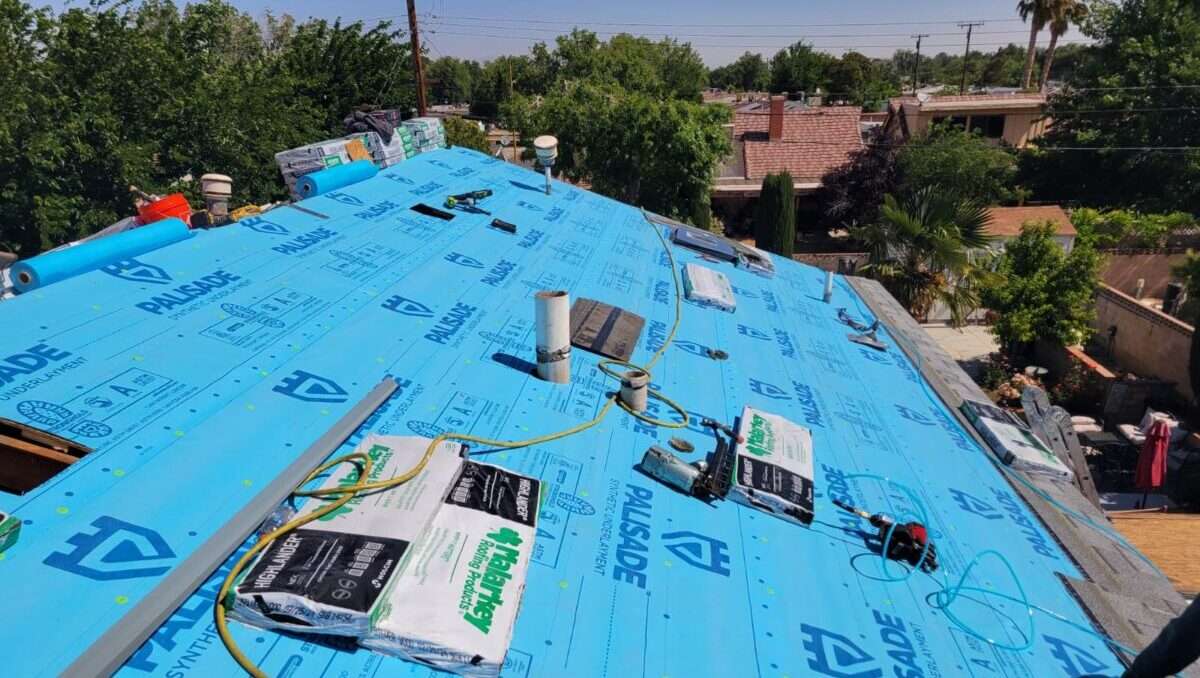
When you think about upgrading your roof, your mind probably jumps to what’s visible—new shingles, sleek tiles, or maybe even a fresh ridge vent. But in neighborhoods across North Los Angeles, from sun-drenched homes in Northridge to breezy lots in Moorpark, the most critical upgrade isn’t what you see from the curb. It’s the layer beneath your roofing material that quietly protects your entire home from the inside out.
That hidden layer is your roof underlayment—a moisture barrier tucked between your roof deck and its outer covering. Often overlooked, underlayment plays a powerful role in defending against rain, heat, wind, and even fire exposure. Whether you’re dealing with aging shingles or intact tile showing signs of leaks underneath, upgrading this foundational layer can dramatically extend your roof’s lifespan, safeguard your attic, and improve your home’s overall resilience in California’s shifting climate.
What Is Roof Underlayment?
Roof underlayment is the unsung hero of your roofing system—a barrier installed directly onto the roof deck, beneath your tiles or shingles. While most homeowners see only the top layer, the underlayment is what helps keep your home dry when the weather turns. It’s designed to catch and redirect any moisture that gets past your roof’s outer layer, acting as a second line of defense.
In North Los Angeles, where intense summer sun can be followed by seasonal downpours or even post-wildfire rains, the role of underlayment is especially vital. It cushions your roof against sudden shifts in moisture, shields the wood structure from rot, and adds fire resistance in zones where embers are a real concern. Without it—or with an outdated or failing version—your home could be vulnerable even if your tiles or shingles appear intact.
Understanding the Right Match: Shingles vs. Tile Underlayment
Choosing the correct underlayment isn’t just a technicality—it’s a strategic decision that protects your home based on the roof type and the local conditions. At Coronado Roof Care, we specialize in selecting the right materials for homes across diverse microclimates like Santa Clarita, Westlake Village, and Inyokern. Here’s what that means for you.
For shingle roofs, we install Palisade synthetic underlayment, a modern upgrade designed to outperform traditional felt. It’s lightweight, resistant to UV exposure, and highly durable against foot traffic during installation. Synthetic underlayment also offers superior water resistance and breathability—key features for asphalt shingle systems exposed to long stretches of direct sunlight like those in Calabasas or Simi Valley.
For tile roofs, we use TU-35 (or higher) felt paper, a heavyweight, asphalt-saturated underlayment built to handle the weight and structure of concrete tile. Unlike synthetic products, TU-35, at minimum, offers proven long-term performance under dense roofing materials and provides the kind of protection tile homes in areas like Valencia and Porter Ranch require—especially in the event of uplift or breakage.
Matching the right underlayment to the material is about more than manufacturer specs—it’s about knowing what works in our region, on real homes, under real conditions.
5 Signs Your Underlayment May Be Failing
Even if your roof looks fine from the outside, issues can start silently beneath the surface. When underlayment begins to deteriorate, it compromises your entire roofing system—even if your tiles or shingles seem intact. Spotting early signs can help prevent major damage and costly repairs down the line, especially in climate-sensitive areas like Frazier Park and Tehachapi.
Here are five common warning signs your underlayment may need attention:
- Water stains or bubbling paint inside your home: Moisture infiltration can travel from the roof into ceilings and walls, often showing up as discoloration or peeling paint.
- Leaks after light rain—not just heavy storms: If water makes its way inside during a mild shower, your underlayment may no longer be forming a proper seal.
- Soft or spongy roof decking: When walking on the roof reveals give or softness, the decking beneath the underlayment could be compromised by water damage.
- Visible mold or attic humidity: A deteriorated moisture barrier allows vapor to build up in attic spaces, leading to mildew, mold, and even wood rot.
- Your roof is over 20 years old: Many older roofs were built with traditional felt underlayment that breaks down over time—especially in high-heat areas like the Antelope Valley.
These signs aren’t always obvious to the untrained eye, which is why many homeowners first notice something’s wrong only after an interior leak. Taking action at the first clue can save your roof structure—and your wallet—from much bigger problems.
How Underlayment Upgrades Protect Long-Term Roof Health
Upgrading your underlayment is more than a stopgap—it’s a forward-thinking investment in your home’s resilience. In the North Los Angeles region, where seasonal extremes and wildfires test the durability of every roof, a high-quality underlayment plays a pivotal role in preserving both structure and comfort.
First and foremost, upgraded underlayment helps block water intrusion even when the top layer of shingles or tiles has shifted, cracked, or aged. Especially in tile systems, where the outer layer is more decorative than waterproof, the underlayment is your home’s true moisture shield. Without it, even a small tile crack in Santa Clarita or Castaic could lead to extensive wood rot or mold inside the attic.
Modern underlayment also defends against long-term structural damage. It safeguards your roof deck—the plywood base beneath everything else—from warping, delamination, and fungal decay. When properly installed, it reduces the risk of heat buildup and attic condensation, which can otherwise shorten the lifespan of your insulation and ventilation system.
In areas with high winds or embers from wildfires—like parts of Tehachapi, Moorpark, or even Pacific Palisades—a secure underlayment provides a critical fire and debris barrier. It helps contain potential sparks, while giving your roof system more time to respond to sudden environmental stress.
Ultimately, this “invisible” layer strengthens every visible part of your roofing system. It keeps tiles in place, extends the life of your shingles, and creates a water- and weather-resistant barrier that works silently but powerfully year after year.
When to Replace Underlayment—and When You Can Wait
Knowing the right time to upgrade your roof’s underlayment can save you thousands in future repairs. In many North Los Angeles homes—from the breezy hillsides of Sylmar to the foothills of Lancaster—timing the replacement correctly ensures your roof remains watertight and structurally sound, even if the outer material still looks serviceable.
The most common time to replace underlayment is during a re-roof or roof replacement. If you’re switching out asphalt shingles or reinstalling your existing concrete tile, replacing the underlayment at the same time is standard practice—and a smart move. For homeowners looking to extend the life of a tile roof without changing the tiles, underlayment replacement becomes the key upgrade.
Sometimes, however, leaks or signs of deterioration show up before a full replacement is on your radar. In these cases, removing and re-laying underlayment beneath the existing outer layer—especially under tile—is a highly effective way to extend your roof’s protection without the cost of starting over.
Here are three ideal moments to consider an underlayment upgrade:
- You’re planning to replace or reinstall roofing material. This is the perfect time to ensure the structure underneath is properly protected for decades to come.
- You’re experiencing leaks without visible exterior damage. This often signals underlayment failure, especially in older tile roofs where the outer tiles can outlast the barrier below.
- You’re preparing for upgrades like solar panels or skylights. Any time your roof is opened up, it makes sense to evaluate—and often replace—the underlayment while access is easy and cost-effective.
Whether you’re in a wildfire zone, preparing for a wet winter, or simply extending the lifespan of a good tile set, the right underlayment at the right time protects your entire roofing investment from the inside out.
Real Example: Underlayment Replacement in Lancaster
One of the clearest demonstrations of how impactful an underlayment upgrade can be came from a project we completed in Lancaster—a city where dry summers meet sudden seasonal downpours. The homeowner had a concrete tile roof that looked fine from the street, but inside the attic, signs of water intrusion were starting to surface: musty smells, damp insulation, and soft spots along the roof deck.
Rather than replacing the tile entirely, we recommended removing and re-installing the existing concrete tiles while upgrading the underlayment to TU-35 (or higher) felt paper—the ideal match for a heavy tile system. Once we carefully stripped the tiles and removed the degraded old felt, the damage underneath was clear. Portions of the original underlayment had completely worn away, leaving the sheathing exposed and vulnerable.
After replacing the damaged plywood and installing new TU-35 underlayment, we securely reset the original tile with proper fasteners and alignment, maintaining the look of the home while upgrading its protection. The transformation wasn’t visible from the curb—but inside, the attic stayed dry, quiet, and structurally sound even during the next two rainy seasons.
This kind of upgrade is especially valuable for homeowners in areas like Palmdale, Quartz Hill, and Acton, where tile roofs are common and weather conditions demand more than just surface-level protection. It’s proof that what lies beneath your roof is just as important as what you see above.
Our Process: Clean, Professional, and Customized
At Coronado Roof Care, upgrading your roof’s underlayment is more than just replacing a layer—it’s a detailed process tailored to your roof type, climate zone, and long-term needs. From homes in Calabasas to ridge-top properties in Tehachapi, we bring the same level of care, precision, and transparency to every project.
We begin by carefully removing the existing roof covering, whether it’s shingles or tile, taking extra care with tile systems so intact materials can be reinstalled later. We then inspect the roof decking to identify any signs of water damage, rot, or structural weakness that may have gone unnoticed. If any compromised areas are found, we replace the affected wood sheathing to create a solid foundation.
Next, we install the correct underlayment for your roofing material:
- For asphalt shingles, we use Palisade synthetic underlayment, offering advanced moisture protection and long-term durability.
- For concrete tile, we apply TU-35 (or higher) felt paper, providing a heavy-duty, time-tested barrier built for high-weight tile systems.
Once the underlayment is securely installed with precision fasteners and proper overlaps, we reinstall your shingles or tiles—or, if you’re upgrading to new materials, we complete the process with your chosen top layer. We ensure all penetrations are sealed, flashings are properly integrated, and ridge caps are fastened to manufacturer specs or better.
Throughout the job, our crew maintains a clean work site, communicates clearly at every step, and works around your schedule to minimize disruption. You can also count on transparent documentation and a workmanship warranty for any leak-specific repairs we perform. This process is how we’ve earned the trust of homeowners across North Los Angeles—and how we protect homes from the inside out, one upgrade at a time.
Why Choose Coronado Roof Care for Underlayment Upgrades
In a region as varied as North Los Angeles—where the sun scorches rooftops in Simi Valley and surprise rainstorms sweep through Santa Clarita Valley—it takes more than basic experience to protect a home. It takes local knowledge, licensed expertise, and a commitment to doing the job right the first time. That’s exactly what sets Coronado Roof Care apart when it comes to underlayment upgrades.
We focus exclusively on residential roofing, which means your home gets our full attention and craftsmanship, not just a quick fix. Whether we’re working on a shingle re-roof in Northridge with Palisade synthetic or re-laying TU-35 underlayment beneath tile in Westlake Village, our approach is grounded in the same principles: precision work, honest guidance, and clear communication.
Homeowners from Moorpark to Frazier Park trust us because we take the time to understand what your roof actually needs. We don’t oversell. We don’t push upgrades that won’t serve your long-term interests. Instead, we evaluate your roofing system as a whole, recommend the right materials for your structure and location, and stand behind our work with integrity.
Every home is different, but the goal is always the same—lasting protection and peace of mind. Whether your roof is thirty years old or you’re planning a strategic upgrade before the next El Niño season, our team is ready to help you protect what matters most from the inside out.
Conclusion
Most roofing upgrades are about what you can see—but the smartest upgrade is often the one you can’t. Underlayment sits out of sight, quietly protecting your home from moisture, heat, wind, and structural decay. Whether you’re in the hills of Santa Clarita or the valleys of Simi, this inner layer is what keeps your roof performing reliably year after year.
If your home has an older roof, unexplained leaks, or you’re planning a tile or shingle replacement, upgrading your underlayment may be the single most impactful step you can take. At Coronado Roof Care, we treat every layer with purpose—from the plywood deck to the final ridge cap—because your home deserves protection built from the inside out. Reach out to learn more about your roof’s current condition and how we can help secure its future with care, clarity, and craftsmanship.